
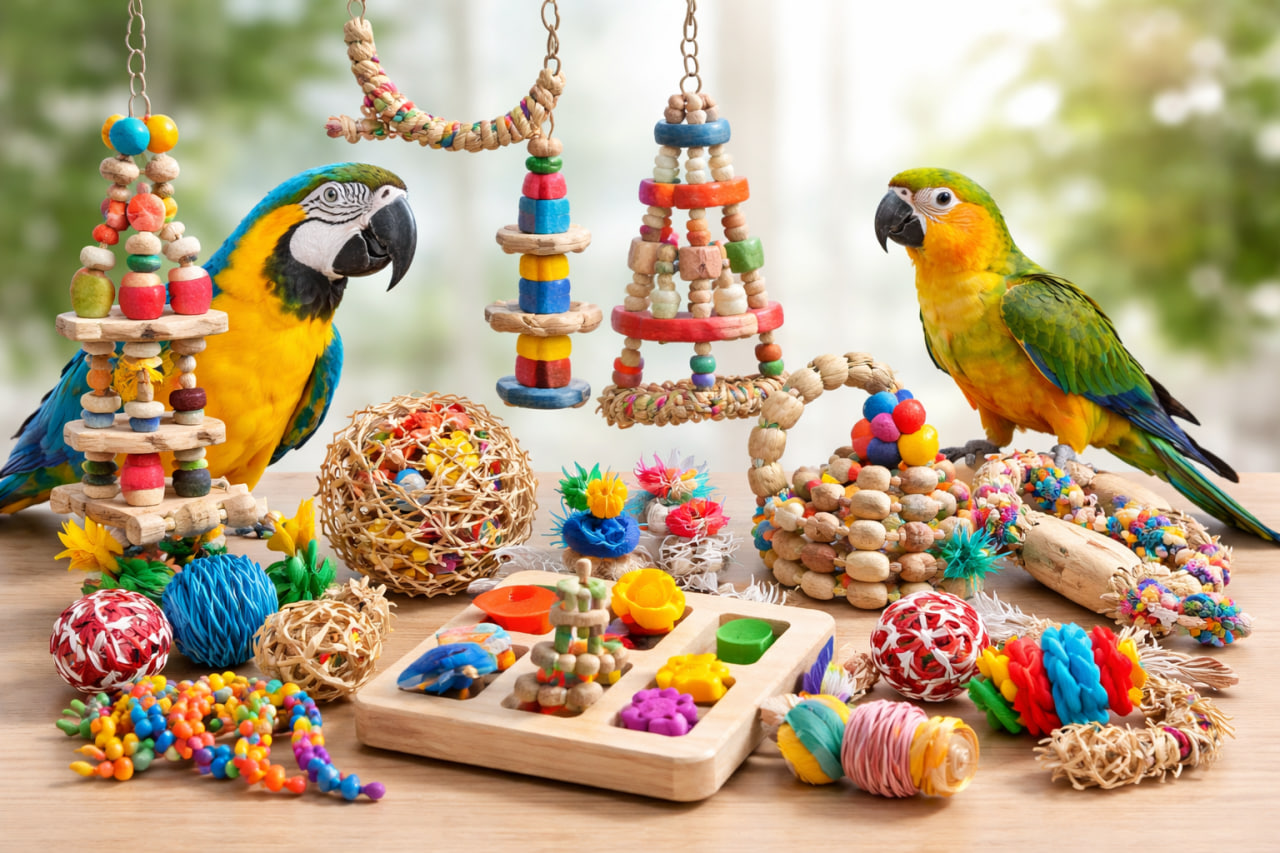
Top 8 Parrot Toys That Support Intelligence, Emotional Health, and Natural Behavior
Parrots are not “decorative pets.” They are highly intelligent, emotionally complex animals with the cognitive abilities of young children. In captivity, their environment must actively support curiosity, problem-solving, and natural instincts — or boredom and frustration can quickly turn into screaming, feather plucking, or destructive behavior.
The best toys for parrots in 2026 are not loud plastic novelties. They are purpose-driven enrichment tools designed to stimulate the mind, encourage natural behaviors, and fit cleanly into a modern home. When chosen well, toys reduce stress, build confidence, and turn a cage or play area into a meaningful living space rather than a holding zone.
Below are the top 8 toy categories that combine enrichment, safety, and thoughtful design — supporting parrots’ daily well-being while keeping their environment engaging and dynamic.
Comfortable, Enriching Living for Parrots
A comfortable living environment for parrots is not defined by cage size alone or by the number of toys present. Comfort comes from how well the environment supports natural behavior and how predictable and safe the bird feels within it.
Parrots are prey animals with highly developed intelligence. This combination means they are constantly evaluating their surroundings for both opportunity and risk. An enriching space gives them control and choice — where to perch, what to interact with, when to engage, and when to rest. When parrots feel trapped or overstimulated, stress builds quietly and often emerges later as behavioral problems.
Enrichment should follow a rhythm rather than overwhelm. A well-designed setup includes a small number of toys that serve different purposes: one for chewing, one for foraging, one for movement, and one for manipulation. These toys are rotated on a schedule so the environment stays familiar but never stale. Predictability reduces anxiety; thoughtful change keeps curiosity alive.
Physical comfort is just as important as mental stimulation. Parrots benefit from varied perch textures and diameters to support foot health and reduce pressure points. Quiet zones within or near the cage allow for uninterrupted rest, while observation perches let the bird safely watch household activity without being forced into constant interaction.
A calm environment is also a clean environment. Excessive clutter, broken toys, and frayed materials can create visual stress and safety risks. Removing damaged items promptly and keeping enrichment purposeful helps parrots relax more fully and engage more deeply with what remains.
In essence, comfortable, enriching living is about intentional design — a space that invites exploration while respecting the bird’s need for safety, routine, and autonomy.
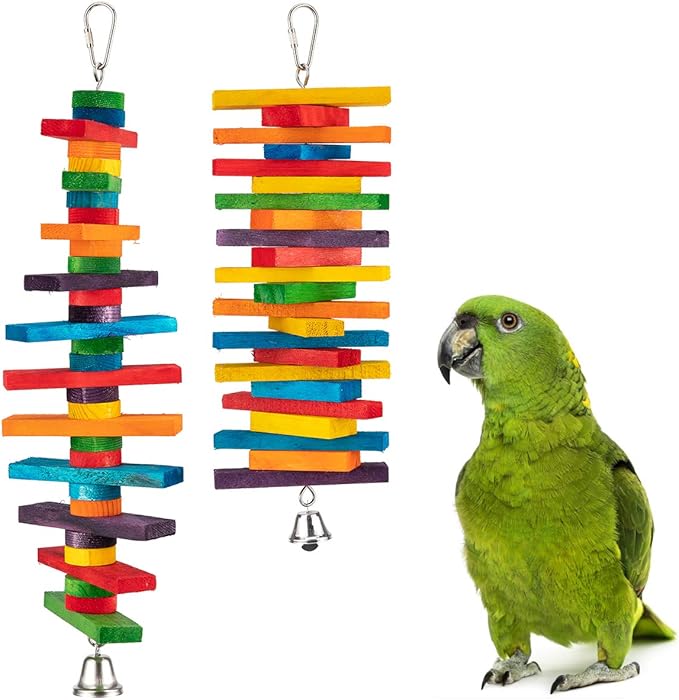
1. Natural Wood Chew Toys
Chewing is a biological necessity for parrots — not a bad habit.
Why this toy is essential:
Without appropriate chewing outlets, parrots turn to cage bars, furniture, or even their own feathers.
Well-being benefits:
Natural wood toys satisfy the urge to shred and destroy, which relieves stress and prevents beak overgrowth. Woods like balsa, pine, manzanita, and applewood are popular because they’re safe and destructible.
Look for toys made with untreated wood, vegetable-based dyes, and stainless-steel hardware. The goal isn’t durability — it’s safe destruction. Regular replacement keeps the experience fresh without overstimulation.
Chewing also plays a role in emotional regulation. The repetitive action helps parrots release tension and self-soothe, especially during high-energy periods or environmental changes. Different wood densities matter: softer woods are ideal for beginners or smaller species, while denser woods provide longer-lasting engagement for larger parrots with stronger beaks. Rotating wood types keeps chewing interesting and prevents fixation on a single object.
To buy this product, click here.
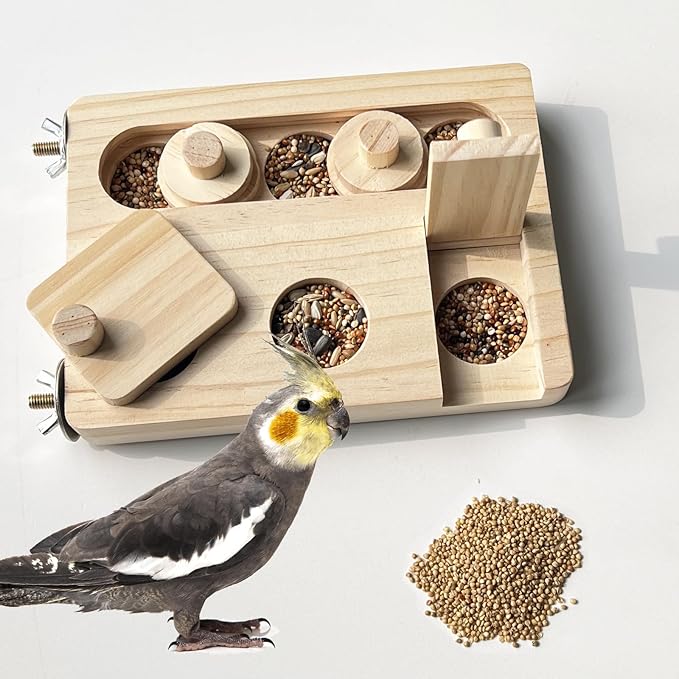
2. Foraging Puzzle Toys
Foraging is one of the most powerful tools for preventing boredom.
Why this toy is essential:
In the wild, parrots spend hours working for food. Bowl-only feeding removes this mental challenge entirely.
Emotional and cognitive benefits:
Foraging toys require parrots to manipulate objects, open compartments, or shred materials to access treats. This engages problem-solving skills and channels energy into focused activity.
Begin with simple designs and increase complexity gradually. A frustrated bird benefits less than a challenged one — balance matters.
Foraging toys are most effective when used as part of daily feeding, not just occasional treats. Even replacing a portion of regular meals with foraging opportunities can significantly reduce restlessness. Materials such as paper cups, cardboard tubes, and layered wood encourage natural searching behaviors. Varying placement within the cage adds spatial challenge and keeps the activity mentally engaging over time.
To buy this product, click here.
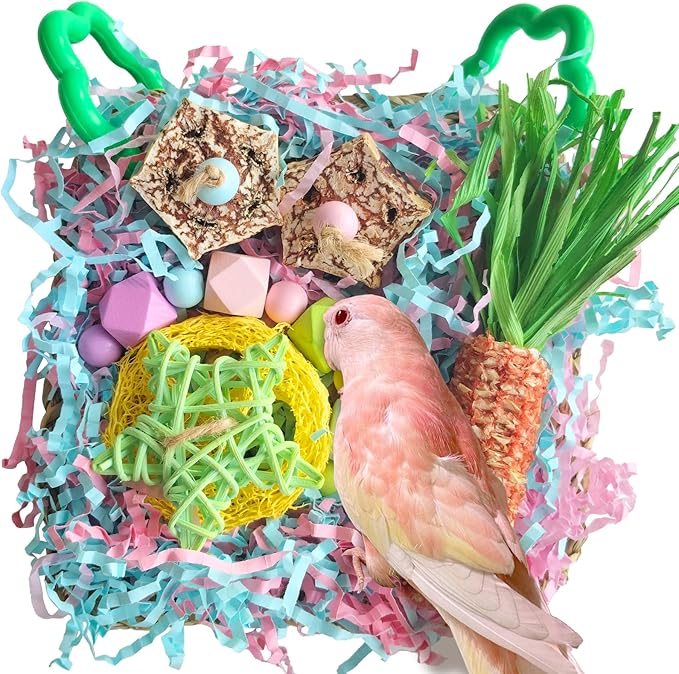
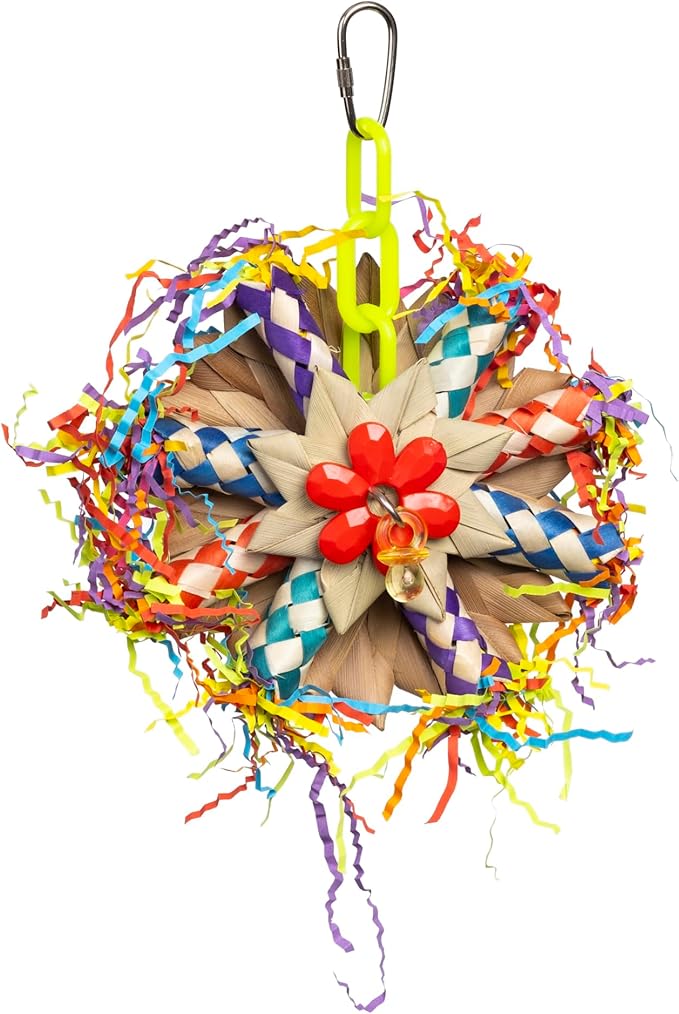
3. Shreddable Paper & Fiber Toys
Shredding is deeply satisfying for parrots.
Why this toy is essential:
Paper, palm leaf, and cardboard toys allow birds to “work through” energy and tension safely.
Behavioral benefits:
Shredding promotes calm engagement and reduces anxiety-driven behaviors. These toys are especially helpful for parrots prone to screaming or pacing.
High-quality versions avoid glue, staples, and inks. They’re meant to be destroyed — and replaced — as part of a healthy enrichment cycle.
Shreddable toys are particularly useful during hormonal seasons, when parrots may feel restless or overstimulated. The act of tearing and pulling mimics nest-related behaviors without encouraging actual nesting. Layered designs extend engagement time, while mixed textures (paper, fiber, soft wood) provide varied sensory input without overwhelming the bird.
To buy this product, click here.
4. Foot Toys (Manipulation Toys)
Parrots love using their feet almost as much as their beaks.
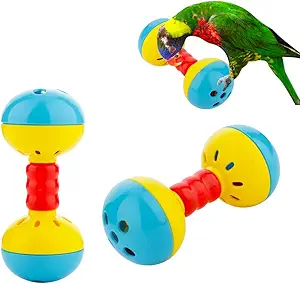
Why this toy is essential:
Foot toys encourage fine motor skills and independent play outside the cage.
Cognitive benefits:
Small objects that can be held, rotated, or stacked keep parrots mentally engaged during downtime. Acrylic shapes, wood blocks, and textured balls are common favorites.
Rotate foot toys frequently to maintain interest without overwhelming the bird.
Foot toys help parrots practice coordination and bilateral movement, which supports brain development and confidence. These toys are ideal for play stands and tabletop sessions, allowing birds to engage without relying on human interaction. Size matters — toys should be large enough to avoid accidental swallowing but light enough to manipulate comfortably.
To buy this product, click here.
5. Climbing & Swing Toys
Movement is essential for both physical and mental health.
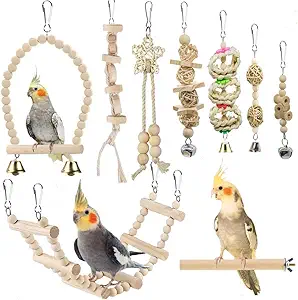
Why this toy is essential:
Limited movement can lead to muscle atrophy and restlessness, especially in cage-bound birds.
Physical benefits:
Swings, ladders, and rope perches encourage balance, coordination, and light exercise. Many parrots also find gentle swinging soothing, making these toys dual-purpose.
Choose sturdy designs with safe rope materials and secure attachment points to prevent entanglement.
Climbing toys support natural locomotion patterns and help parrots feel confident navigating their space. Vertical movement is especially important for species that prefer height and observation. Rope elements should be regularly inspected for fraying, and placement should allow free movement without forcing awkward jumps or wing interference.
To buy this product, click here.
6. Interactive Intelligence Toys
Parrots crave mental challenges.
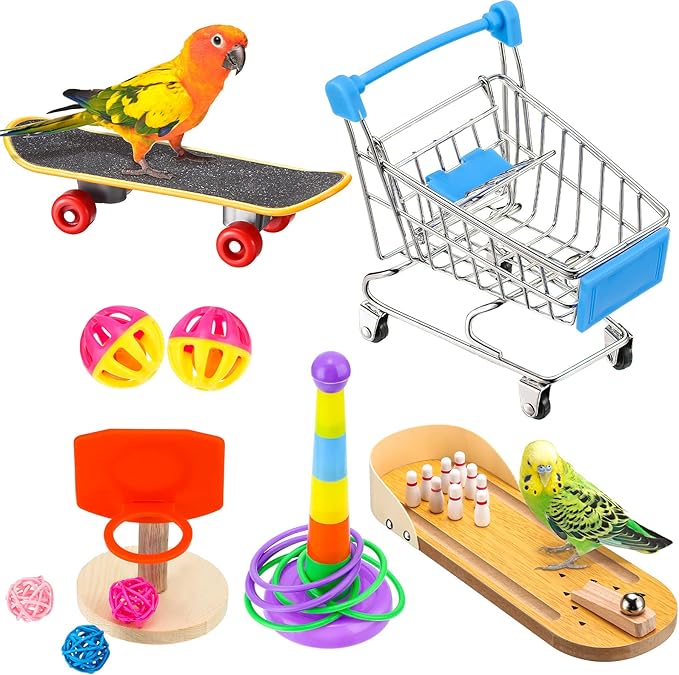
Why this toy is essential:
Highly intelligent species can become frustrated without opportunities to “think.”
Cognitive benefits:
Interactive toys that involve sliding panels, turning wheels, or sequence-based actions stimulate learning and focus. These toys are best introduced gradually and used in short sessions.
They are especially effective for reducing attention-seeking behaviors when paired with positive reinforcement.
These toys work best when difficulty matches the bird’s skill level. Too easy leads to boredom; too difficult leads to avoidance. Some parrots benefit from demonstrations or partially opened mechanisms at first. Over time, these toys can be reset or modified to increase complexity, keeping engagement high without constant replacement.
To buy this product, click here.
7. Bell & Sound Toys (Used Thoughtfully)
Sound exploration is part of parrot communication — when done safely.
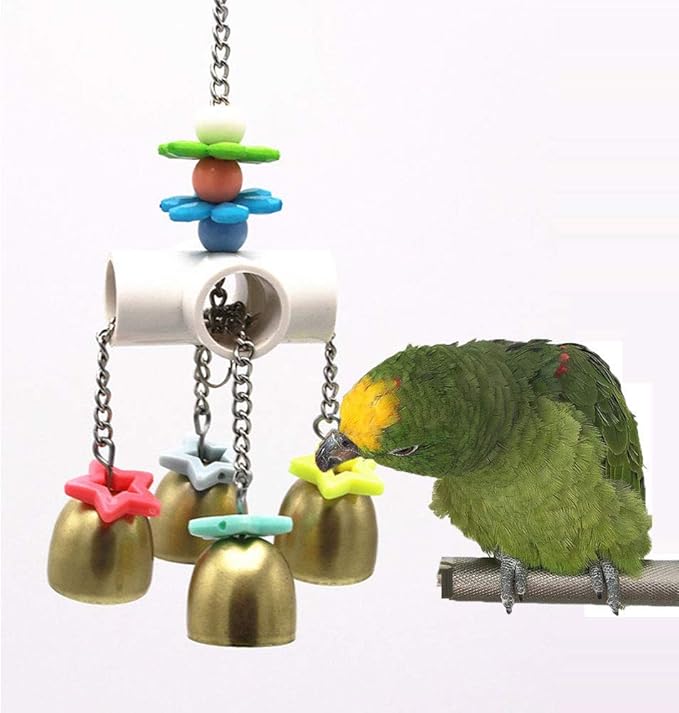
Why this toy is essential:
Some parrots enjoy controlled noise-making as a form of expression.
Emotional benefits:
High-quality bell toys with enclosed clappers or stainless-steel designs allow sound play without the risk of trapped toes or broken parts.
Avoid cheap bells with sharp edges or exposed slots. Sound toys should enrich — not overstimulate.
Sound toys should be monitored closely, especially for parrots prone to obsessive behaviors. Introducing them in moderation prevents overattachment or excessive noise reinforcement. Some birds prefer softer sounds, while others enjoy louder feedback — observing individual preference helps determine appropriate placement and duration of access.
To buy this product, click here.
8. Preening & Comfort Toys (Feather-Safe Materials)
Parrots have a strong instinct to preen — both themselves and trusted companions.
Why this toy is essential:
Without appropriate preening outlets, parrots may over-preen their own feathers or redirect the behavior toward cage bars, toys, or human skin.
Emotional and physical benefits:
Preening toys made from soft, bird-safe materials such as cotton rope, sisal, loofah, fleece strips, or soft leather allow parrots to engage in gentle grooming behaviors. This supports feather condition, reduces stress, and provides a calming, self-directed activity.
High-quality preening toys are free from loose threads, synthetic fibers, and toxic dyes. They should be soft enough to manipulate without encouraging chewing that could lead to ingestion.
Preening toys are especially beneficial for parrots that lack a bonded cage mate. They can serve as a soothing substitute for social grooming and help birds settle during rest periods. Placement matters — these toys work best near preferred perches or sleeping areas, where birds naturally preen. Regular inspection is important, as worn materials should be replaced promptly to maintain safety.
To buy this product, click here.
Must-Have Enrichment Priorities for Parrots (Expanded)
Enrichment priorities are about quality, balance, and relevance, not volume. Parrots do not benefit from every type of toy at once. Instead, their well-being improves when enrichment addresses core behavioral needs consistently.
The first priority is destruction. Parrots are wired to chew and dismantle. Providing safe, destructible materials prevents redirected behaviors like bar chewing, feather damage, or furniture destruction. Toys should be allowed — even expected — to be destroyed without correction.
The second priority is problem-solving. Foraging and puzzle toys slow down feeding, encourage persistence, and activate cognitive skills. These activities reduce idle time, which is often the root of vocalization issues and attention-seeking behaviors.
Movement comes next. Climbing, swinging, and repositioning within the cage maintain muscle tone, coordination, and confidence. Birds that move regularly tend to display fewer stress behaviors and adjust better to environmental changes.
Manipulation and choice are equally important. Foot toys and modular elements allow parrots to engage independently, building confidence and reducing dependency on constant human interaction for stimulation.
Finally, enrichment must be dynamic. Rotation prevents boredom without triggering anxiety. Introducing small changes within a familiar structure respects the parrot’s need for both novelty and predictability.
When enrichment priorities are met consistently, parrots become calmer, more focused, and more emotionally resilient. These priorities form the foundation of a healthy captive life — not as luxuries, but as daily necessities.
Conclusion
Toys are not optional accessories in a parrot’s life — they are essential tools for mental health, emotional balance, and behavioral stability. A thoughtfully enriched environment gives parrots appropriate outlets for chewing, foraging, movement, manipulation, and comfort, all of which support their natural instincts in captivity.
The most effective toys are not the loudest or most complex. They are the ones that respect a parrot’s intelligence, provide safe opportunities for destruction and problem-solving, and fit into a predictable routine with room for exploration. When toys are chosen with intention and rotated thoughtfully, they reduce stress, prevent boredom-related behaviors, and help parrots feel more secure in their space.
A modern approach to parrot care prioritizes quality over quantity. By investing in well-designed enrichment tools and observing how each bird interacts with them, owners can create an environment that encourages curiosity, confidence, and calm engagement. In the long term, this kind of enrichment doesn’t just make life more interesting for parrots — it supports healthier behavior, stronger trust, and a better relationship between bird and human.
